
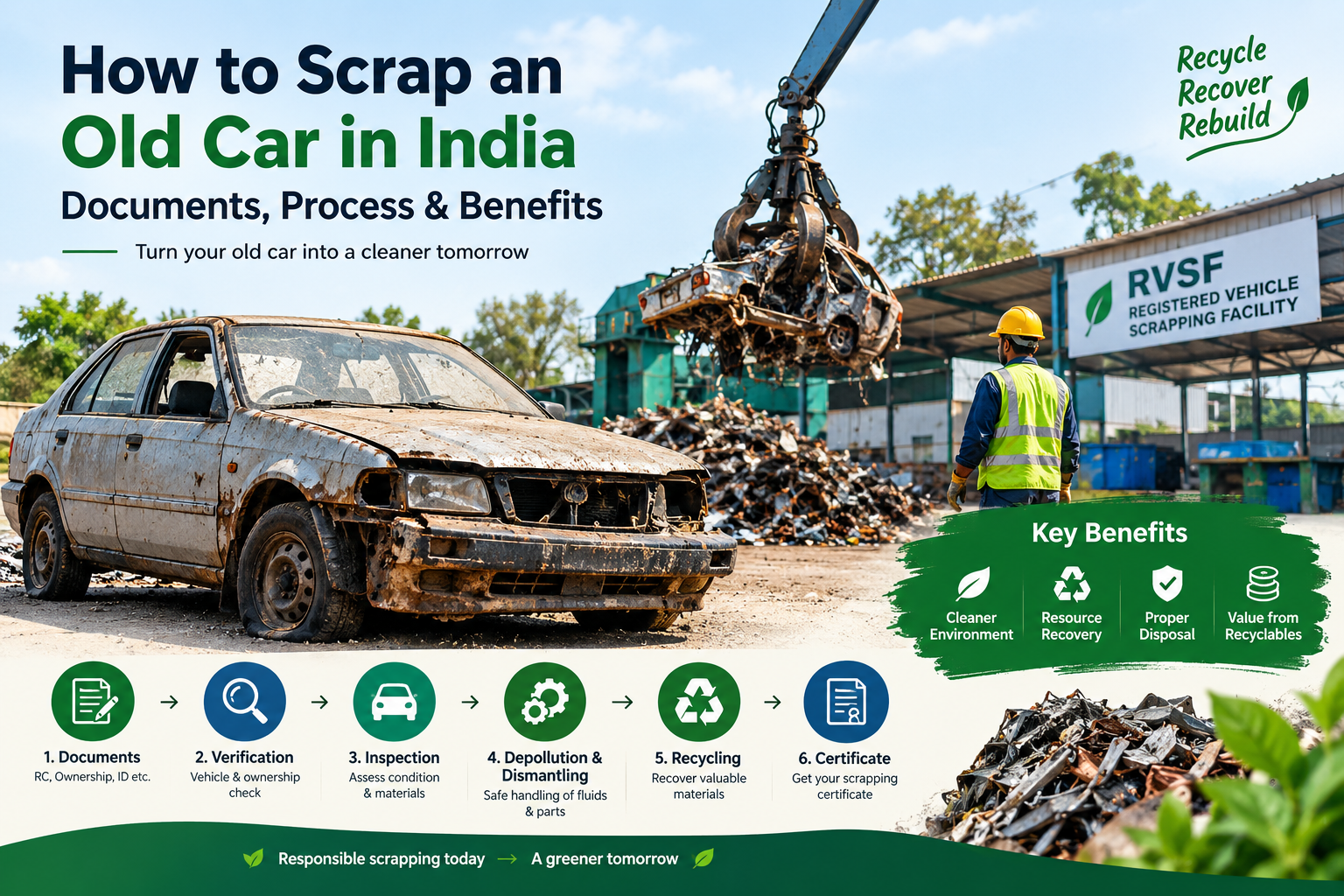
If you are wondering how to scrap an old car in India, using a Registered Vehicle Scrapping Facility (RVSF) is an organised way to retire an unwanted, damaged, or end-of-life vehicle. The car scrapping process includes vehicle verification, document checks, inspection, depollution, dismantling, recycling, and required documentation.
Whether your car is old, accident-damaged, non-running, or no longer economical to repair, responsible old car scrapping can help you dispose of the vehicle properly while supporting material recovery and recycling.
Why Scrap an Old Car?
There are several reasons to consider scrapping an old car in India. An ageing vehicle may require frequent repairs, become expensive to maintain, or remain unused for long periods. Accident-damaged and severely deteriorated cars may also be difficult or uneconomical to repair.
Instead of leaving an unwanted vehicle unused, responsible scrapping allows valuable materials such as steel, aluminium, copper, glass, and rubber to be recovered.
The process also provides a more structured alternative to informal vehicle disposal.
How to Scrap an Old Car in India
The car scrapping process in India generally involves the following steps:
1. Choose an RVSF
Start by finding an appropriate Registered Vehicle Scrapping Facility (RVSF). Check the facility’s registration, vehicle categories accepted, documentation process, and whether scrap car pickup is available.
2. Submit Vehicle Details
Provide basic information such as the registration number, vehicle type, ownership details, and vehicle condition. The facility can then begin the required verification process.
3. Complete Verification
The vehicle and ownership details are checked before the car is accepted for scrapping. Proper verification helps establish the vehicle’s identity and confirms that the person submitting it is authorised to do so.
4. Submit Required Documents
The documents required may vary depending on the vehicle and applicable procedures. Generally, owners may need:
- Registration Certificate (RC)
- Proof of ownership
- Identity verification
- Authorisation documents, where applicable
- Other vehicle-related records if required
Always confirm the latest document requirements with your selected RVSF.
5. Vehicle Inspection
The car may be inspected to assess its condition and identify components and materials that can be recovered during dismantling.
6. Depollution and Dismantling
Before dismantling, appropriate depollution procedures are carried out. Vehicle fluids and other materials requiring controlled handling are managed appropriately.
The car is then dismantled systematically, with recyclable materials separated for recovery.
7. Recycling and Documentation
Materials such as steel, aluminium, copper, glass, and rubber can be recovered and directed toward suitable recycling processes. The relevant scrapping documentation is also processed according to applicable requirements.
Can You Scrap a Non-Running Car?
Yes, a non-running or damaged car may be suitable for the end-of-life vehicle process, subject to verification and applicable requirements.
If your car cannot be driven to the facility, ask about scrap car pickup services. Pickup can be especially useful for accident-damaged, heavily damaged, or long-unused vehicles.
Benefits of Old Car Scrapping
Choosing responsible old car scrapping offers several benefits:
- Recycling: Valuable materials can be recovered and reused.
- Reduced waste: Proper scrapping helps reduce unmanaged automotive waste.
- Resource recovery: Metals such as steel, aluminium, and copper can enter recycling streams.
- Convenient disposal: An RVSF provides an organised route for retiring an unwanted vehicle.
- Better documentation: The process includes relevant vehicle verification and scrapping records.
- Environmental responsibility: Proper depollution and recycling support responsible ELV management.
What Happens to a Scrapped Car?
After the car is accepted, it is processed through depollution and dismantling. Different materials are separated for recovery.
Steel and aluminium can be recycled, while glass and rubber may be directed toward suitable recovery processes. Vehicle fluids are handled during depollution, and selected components may be recovered depending on their condition.
This approach helps maximise material recovery and reduces unnecessary vehicle waste.
Why Choose an RVSF?
When learning how to scrap an old car in India, choosing an appropriate RVSF can provide a more structured process than informal disposal.
An RVSF-based process can include vehicle verification, organised dismantling, depollution, material recovery, and applicable scrapping documentation.
For official information about India’s vehicle scrapping system, vehicle owners can also refer to the government vehicle scrapping portal.
Official Vehicle Scrapping Portal
Frequently Asked Questions
What documents are needed to scrap an old car?
Documents may include the RC, proof of ownership, identity verification, and authorisation documents where applicable. Requirements can vary, so confirm them with your RVSF.
Can I scrap a car that does not run?
A non-running or damaged car may be eligible for scrapping, subject to applicable requirements. Pickup services may also be available.
What happens after a car is scrapped?
The vehicle is depolluted and dismantled. Recyclable materials such as metals, glass, and rubber are separated for suitable recovery and recycling.
What is an RVSF?
RVSF stands for Registered Vehicle Scrapping Facility, a registered facility that handles vehicle scrapping and dismantling through an organised process.
Final Thoughts
Understanding how to scrap an old car in India makes it easier to retire a vehicle responsibly. From verification and documentation to depollution, dismantling, and recycling, each stage helps ensure that an end-of-life car is handled systematically.
If you have an old, damaged, unwanted, or non-running vehicle, contact an appropriate RVSF to understand the current requirements, pickup options, documentation, and car scrapping process.
To scrap an old car in India, contact a Registered Vehicle Scrapping Facility (RVSF), submit the required vehicle and ownership documents, complete verification and inspection, and hand over the car for depollution, dismantling, and recycling.
The documents generally required include the Registration Certificate (RC), proof of ownership, identity verification, and authorisation documents where applicable. Requirements may vary, so confirm the latest document checklist with your RVSF.
The car scrapping process in India generally includes vehicle and document verification, inspection, depollution, dismantling, recycling, and completion of the required scrapping documentation.
RVSF stands for Registered Vehicle Scrapping Facility. It is a registered facility that handles eligible end-of-life vehicles through organised verification, depollution, dismantling, recycling, and vehicle scrapping procedures.
Yes, a non-running, accident-damaged, or heavily damaged car may be eligible for scrapping, subject to vehicle verification and applicable requirements. RVSFs may also provide scrap car pickup or transportation services.
After scrapping, the car is depolluted and dismantled, while recyclable materials such as steel, aluminium, copper, glass, and rubber are separated for appropriate recycling or recovery.
Yes, responsible car scrapping supports recycling, material recovery, and proper end-of-life vehicle management. It helps reduce automotive waste and allows valuable materials to be recovered and reused.
Under India’s vehicle scrapping framework, documents including a Certificate of Deposit (COD) and Certificate of Vehicle Scrapping (CVS) are associated with the scrapping process, subject to the applicable procedure.